

How to Winterize & Close An Inground Pool
Closing vs. Winterizing
Closing your pool refers to putting the cover on. You can close your pool for a night or for the entire winter season. Many homeowners close their pool during cooler months.
Winterizing your pool can prevent damage to the pool when it won’t be used for several months. The process includes turning off all equipment, balancing the water, and removing water from lines and vessels.
Everything You Need to Close Your Inground Pool
These tools will help you prepare your pool for the winter months when your pool is not in use. If you don’t have these tools or you’re not sure how to use this equipment, contact a pool technician.
- Basic tools: Screwdriver, wrench, a ratchet set, to remove ladders and other accessories
- Wall brush
- Leaf net
- Air blower: This is very important. Make sure to use an air blower like a liner vac, with high volume and low pressure
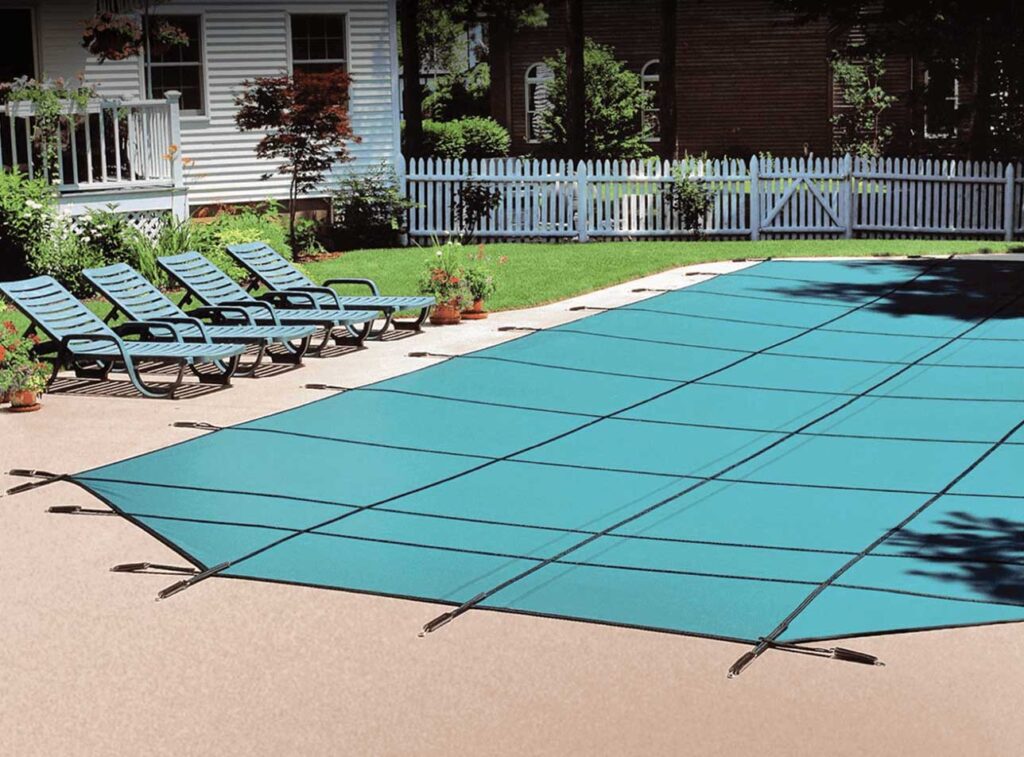
- Seasonal safety cover
- Pool vacuum
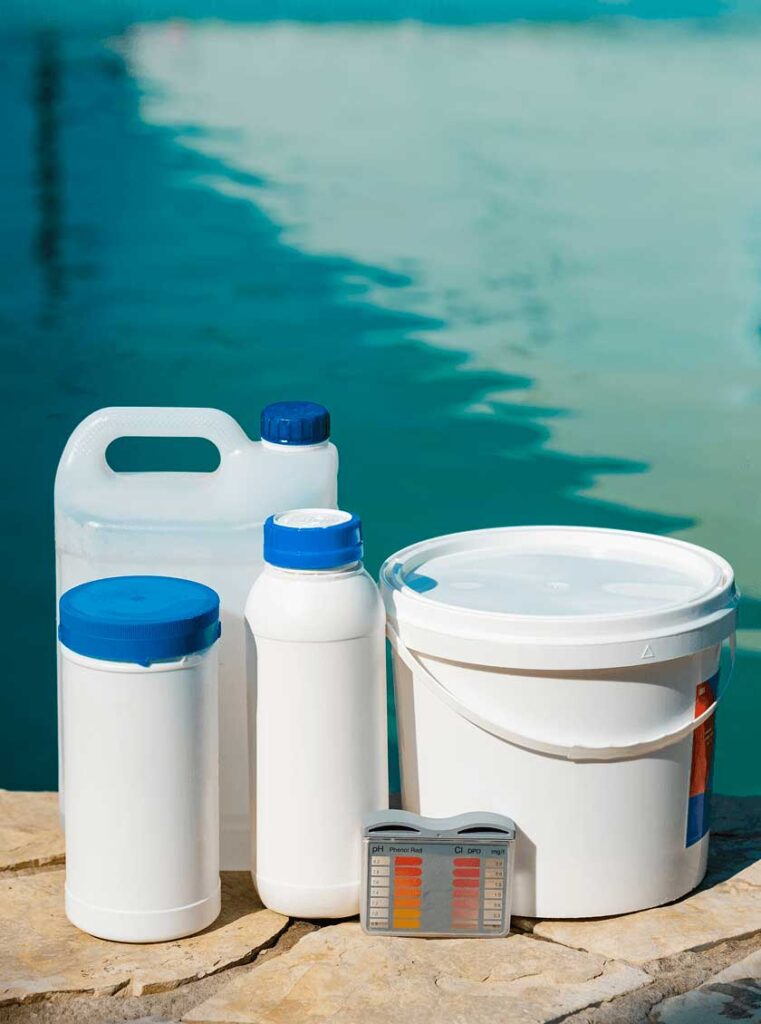
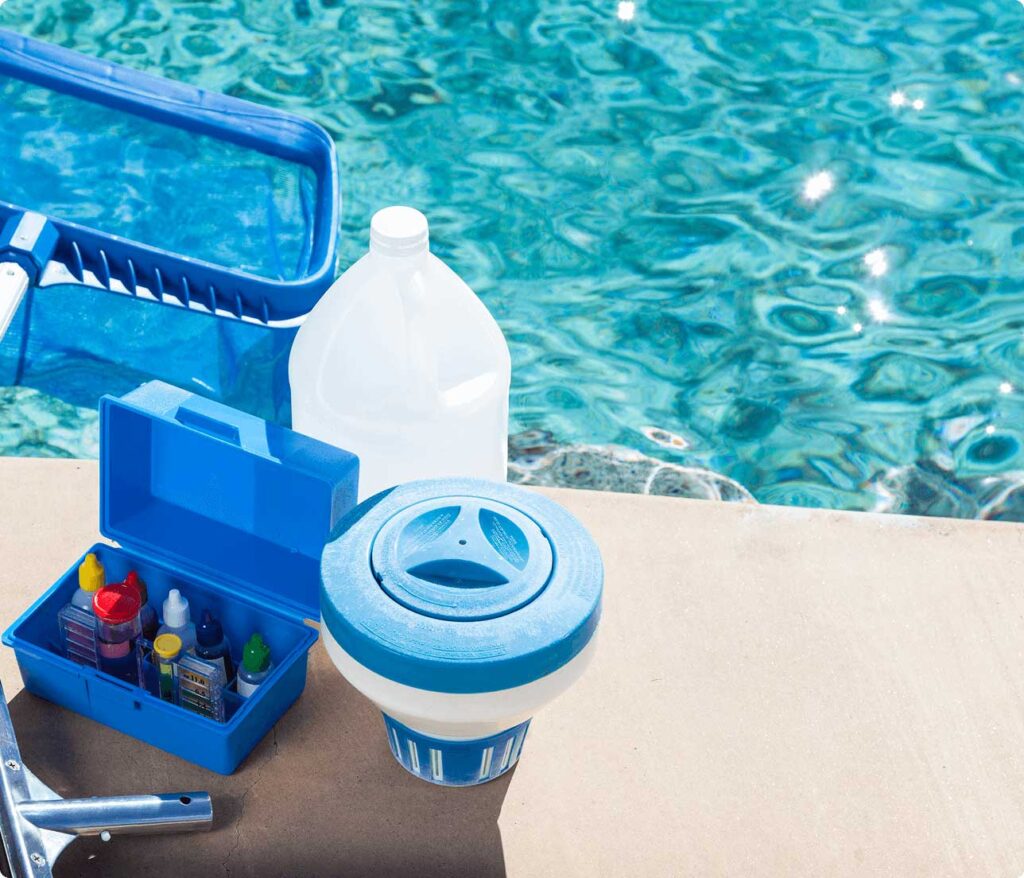
You’ll need a few pool chemicals to prepare your water before closing. If you live in an area where it snows or where winter temperatures get very cold, you’ll want to use chemicals and non-toxic antifreeze to prevent freezing. Even if you live in a warmer climate but still plan to close your pool, you’ll want to use the right chemicals to maintain your pool’s water chemistry. Chemicals for winterizing your pool:
- Chlorine
- Algaecide
- Cyanuric acid
- Shock
- Non-toxic anti-freeze
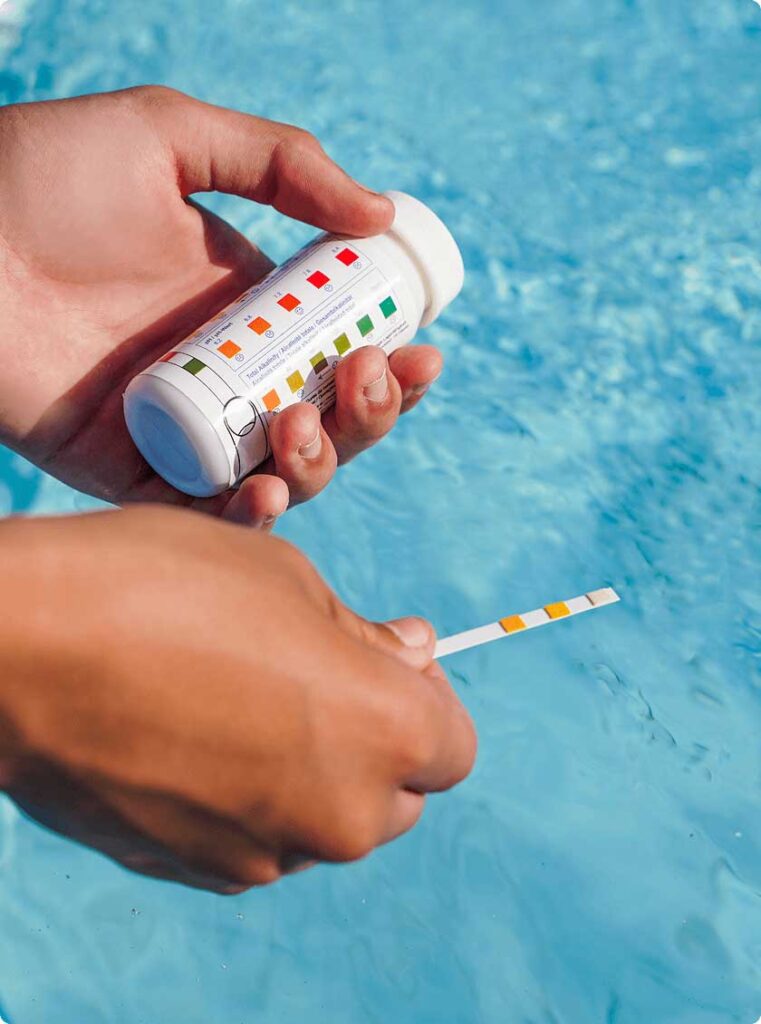
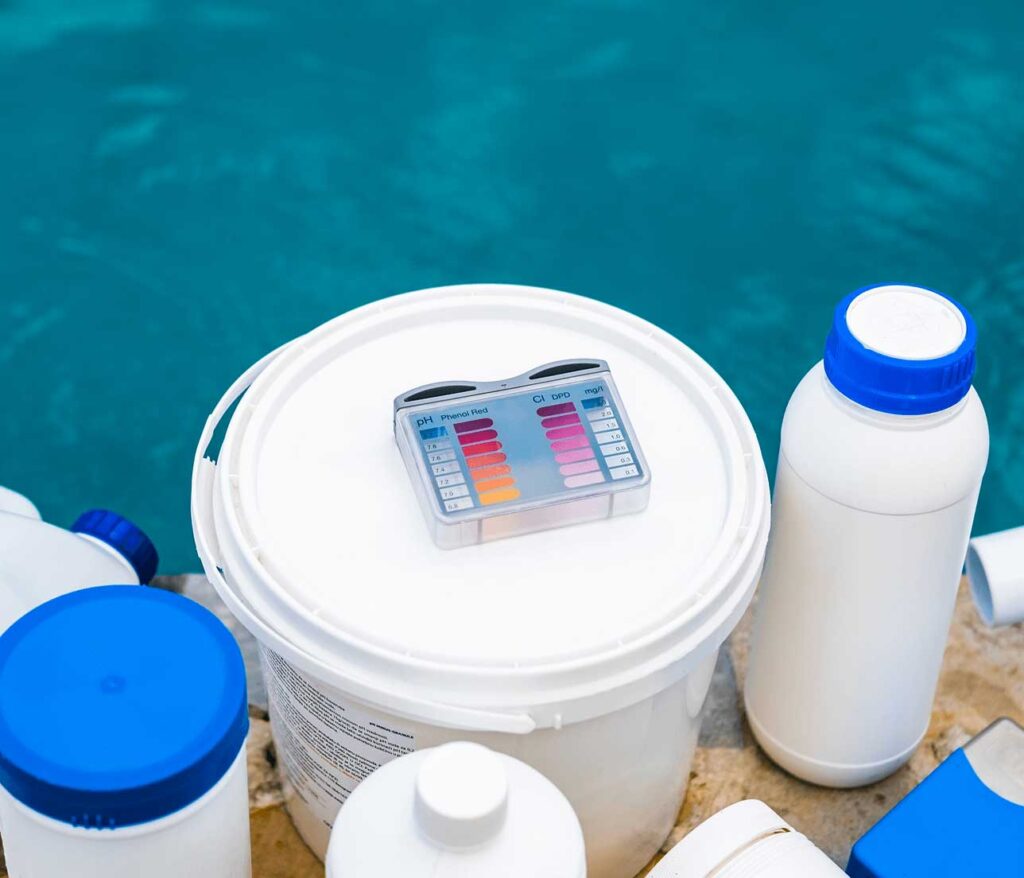
- Depending on the pH level of your pool, which you can test on your own or collect a sample and bring it to a testing facility or local builder, you may need a pH increaser or decreaser
Note: Consult with the industry standards for pool water before using any chemicals or adjusting the pH. If you have questions, contact your local pool dealer. It’s important to check your water frequently and most dealers can test the water for you.
How to Winterize Your Pool in Cold Climates
If you live in a cold climate where temperatures drop between 25 and 50 degrees, you’ll have a few more steps in the process vs. closing a pool for more mild winters.
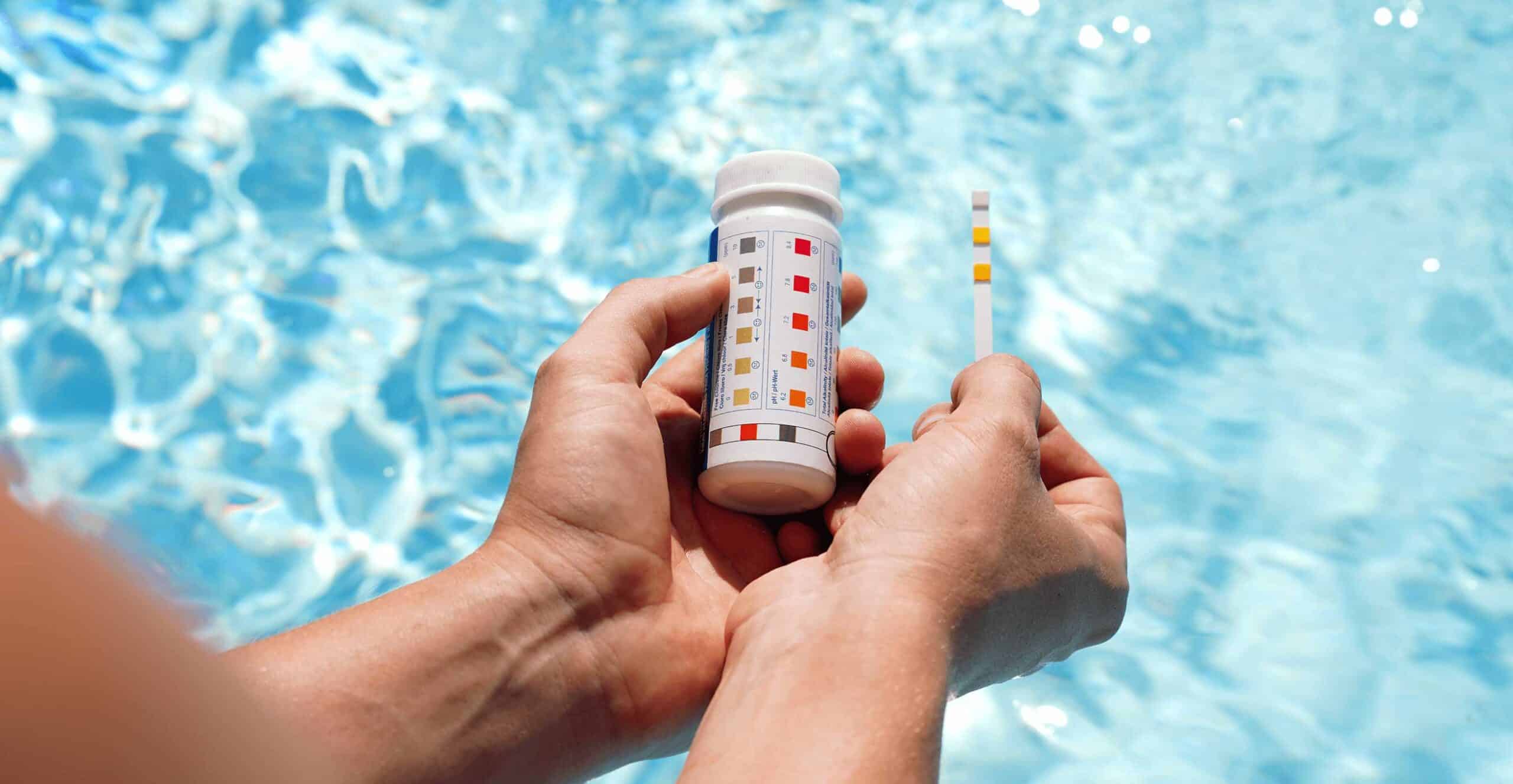
Step One: Balance and Shock Your Pool
First, adjust pool pH to 7.2-7.8. This will prevent staining, scaling and algae growth. Next, shock the pool following product directions.
Run the filter for 24-48 hours depending on how dirty the water is.
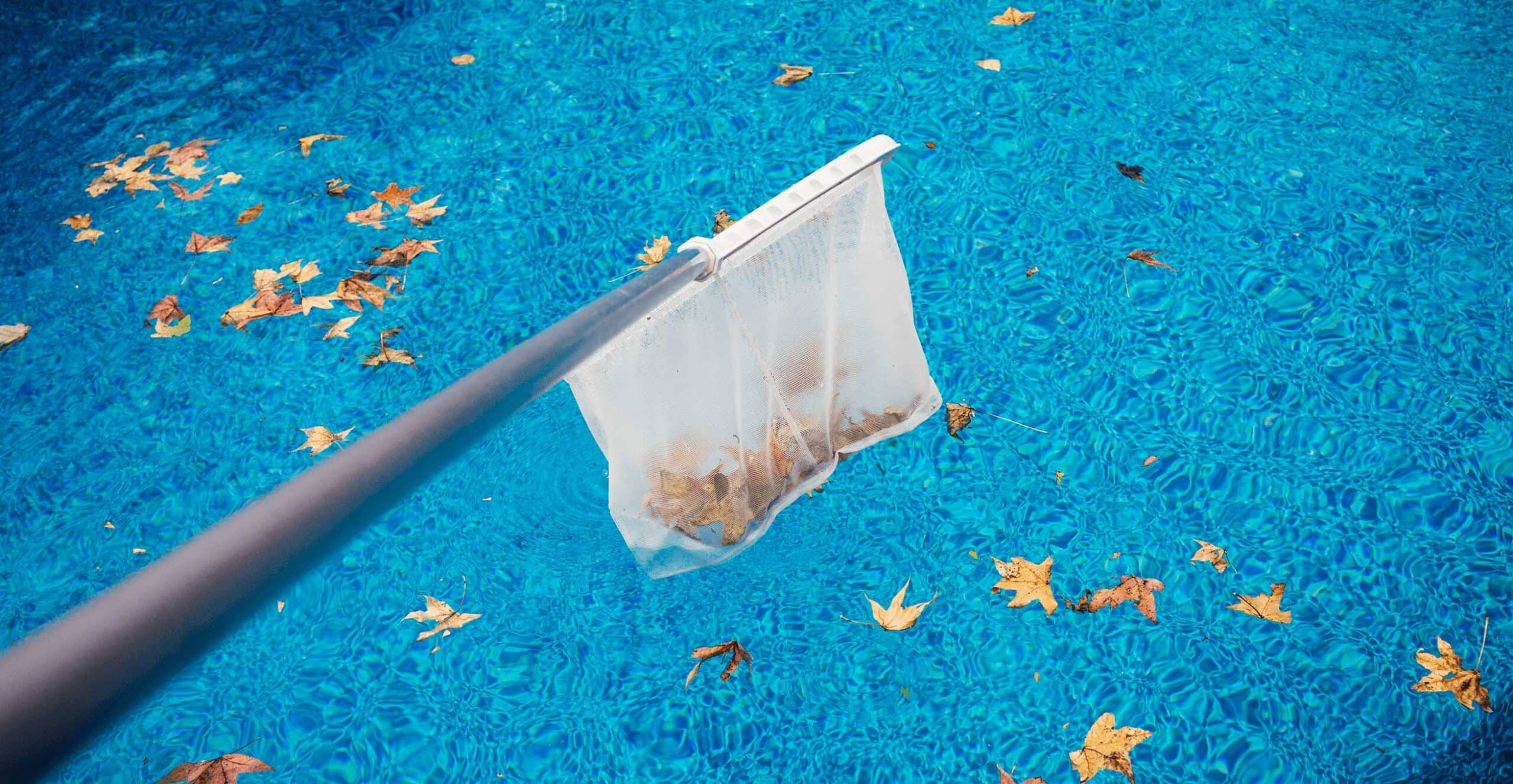
Step Two: Clean & Vacuum the Pool
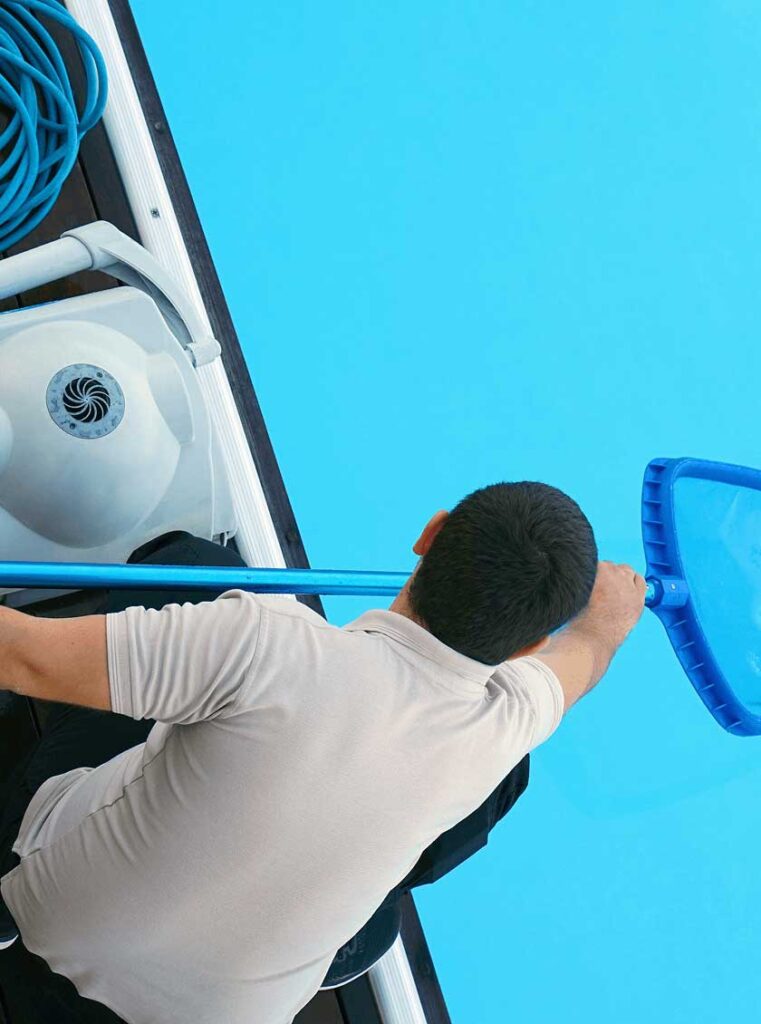
Skim out floating debris and vacuum the pool thoroughly.
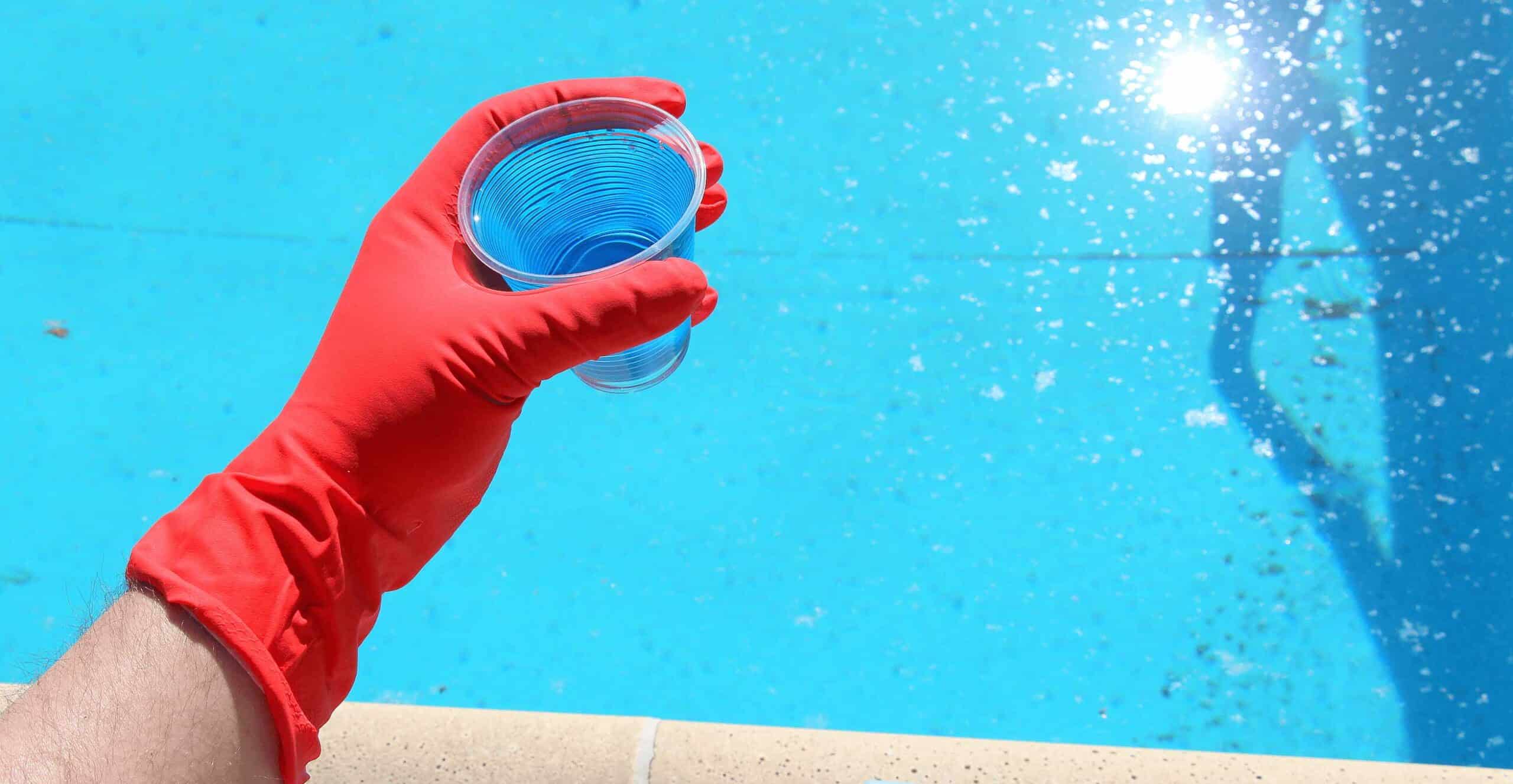
Step Three: Add Algaecide
Add an algaecide to prevent algae from forming before the water has frozen.
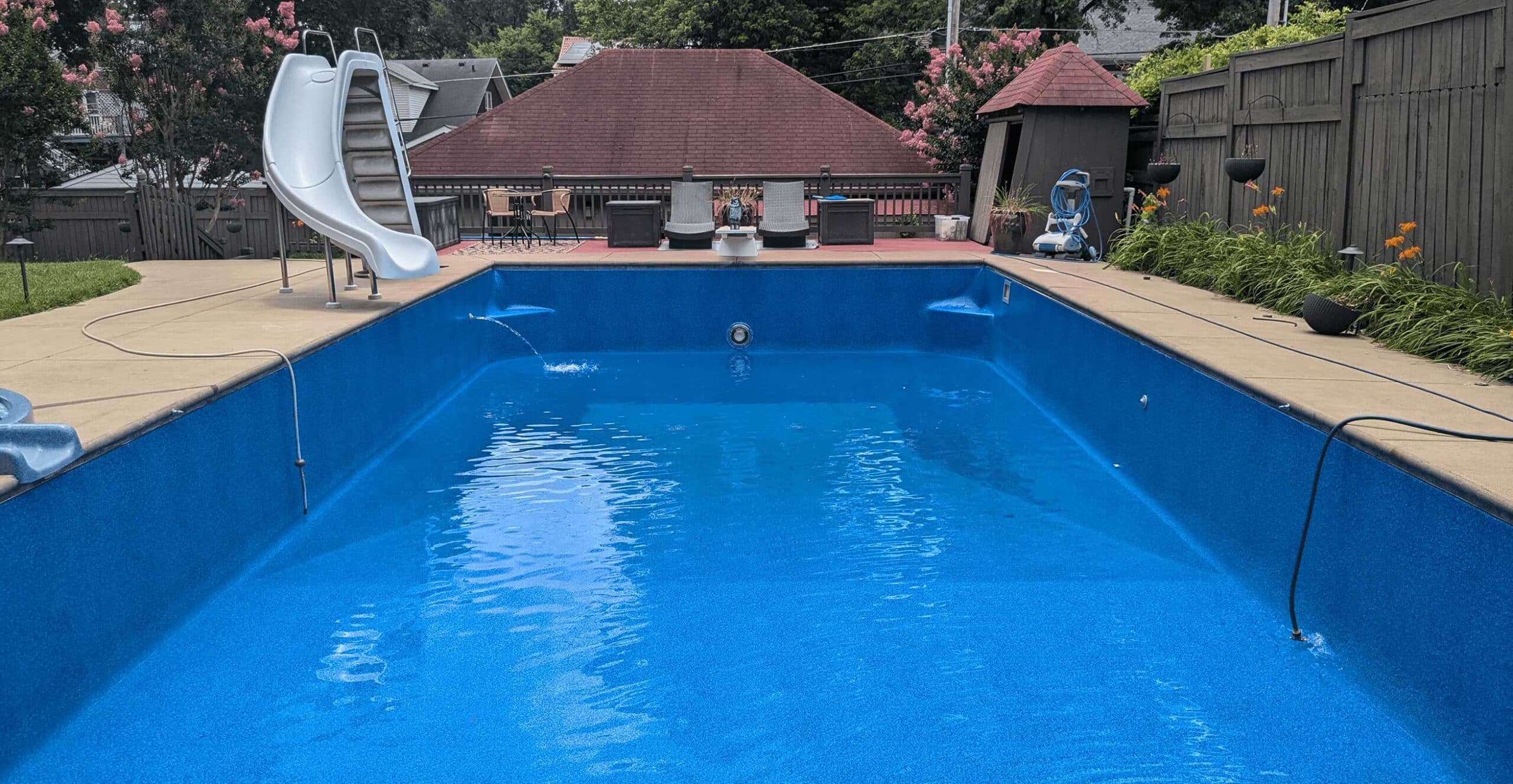
Step Four: Lower Water & Drain Equipment
Follow your pool manufacturer’s directions for lowering your water level. You should never fully drain a swimming pool. In most cases, it’s safe to lower the water level approximately 1” beneath the skimmer. Next, blow the water out of the pump, pipes, hoses, and any vessel that holds water to prevent damage that can occur when the water expands from freezing. Water can expand between 9-10% due to cold temperatures.
Step Five: Power Turnoff
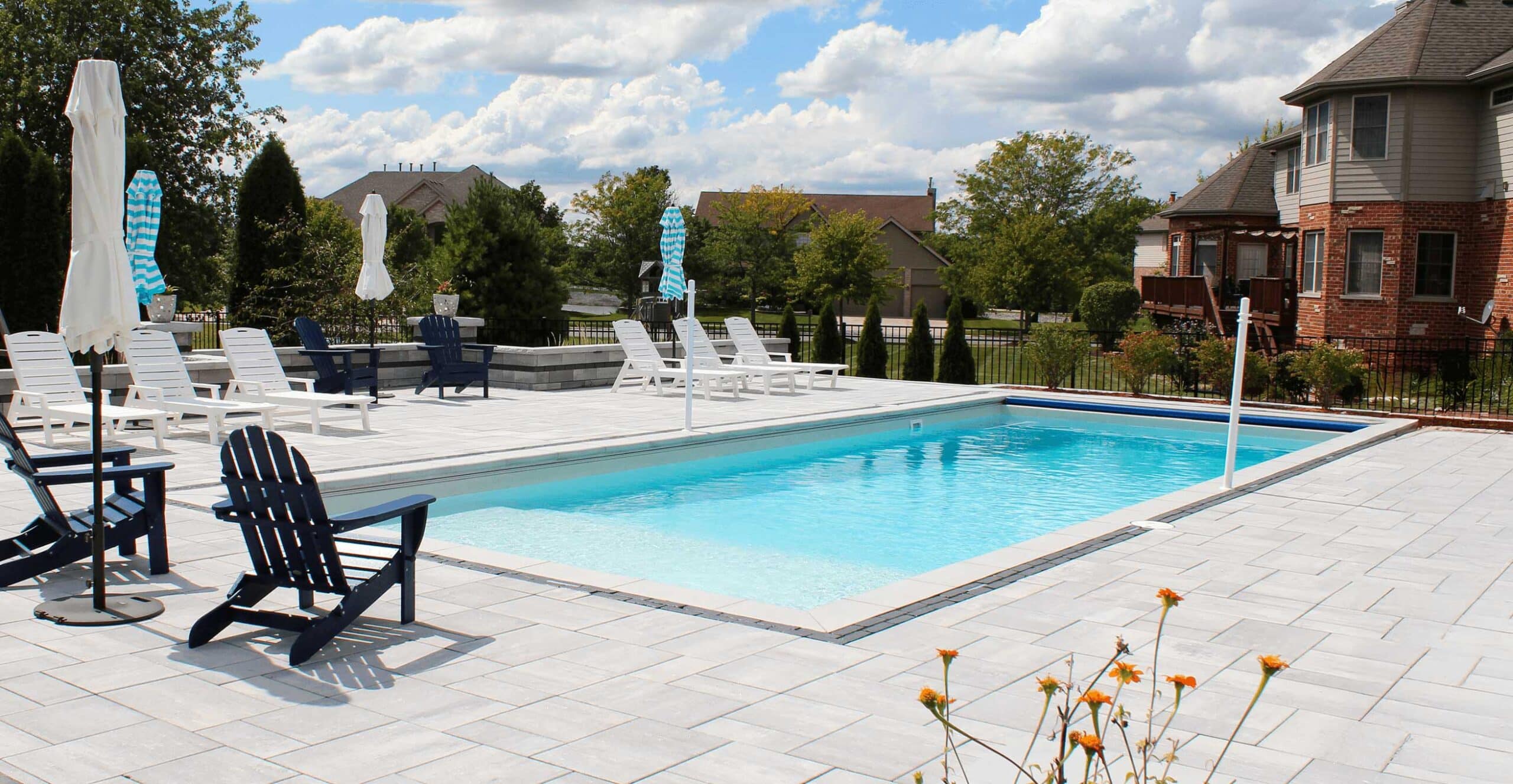
Turn off the filter pump and drain the pump, filter, heater, and other equipment. Store equipment to prevent damage. Follow the manufacturer’s directions for lubrication and proper covering.
Turn off all power to the support equipment and remove fuses or turn the circuit breakers to “off.”
Step Six: Remove Accessories
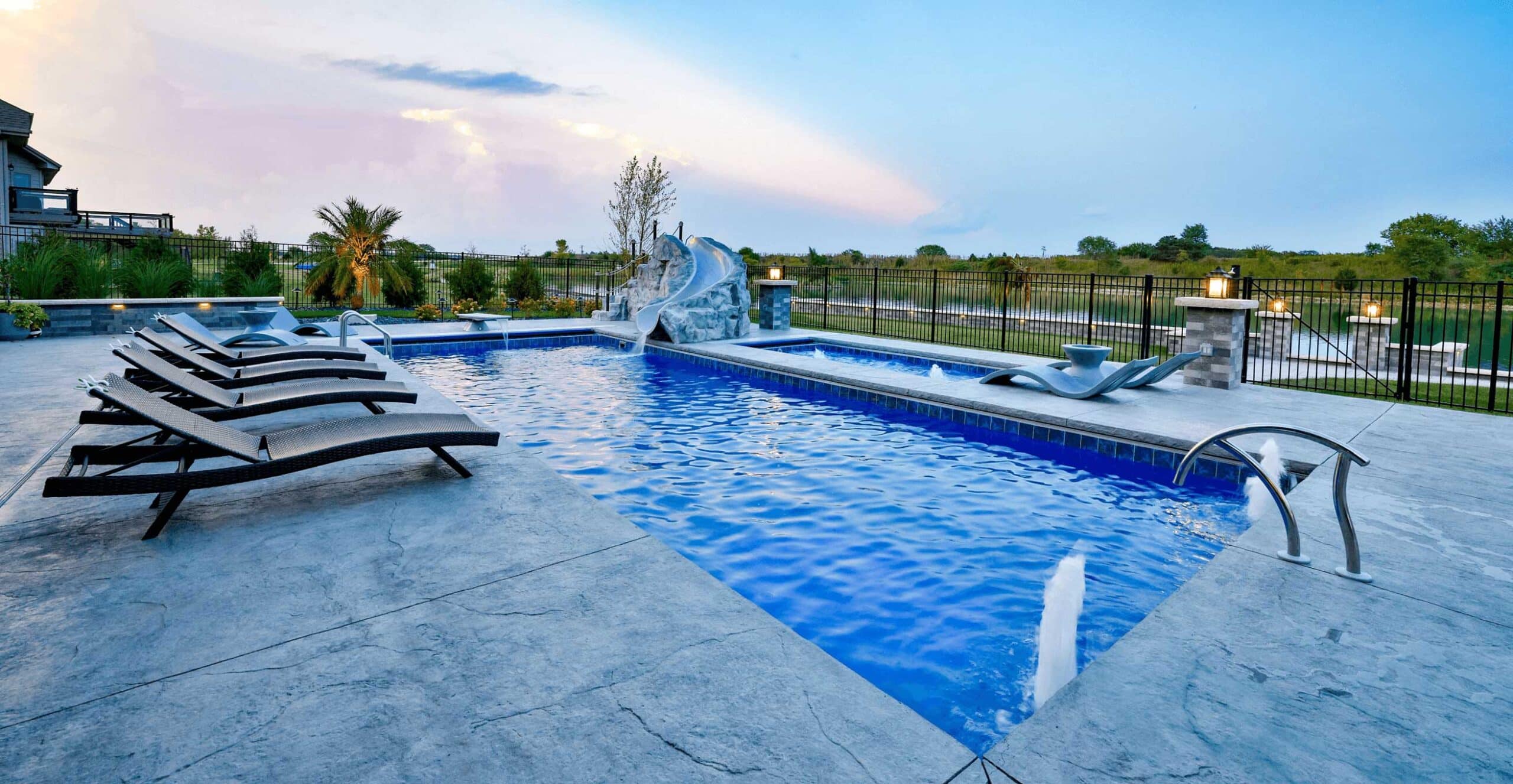
Remove and store accessories. If you have a slide or diving board, check with your pool professional.
Step Seven: Cover
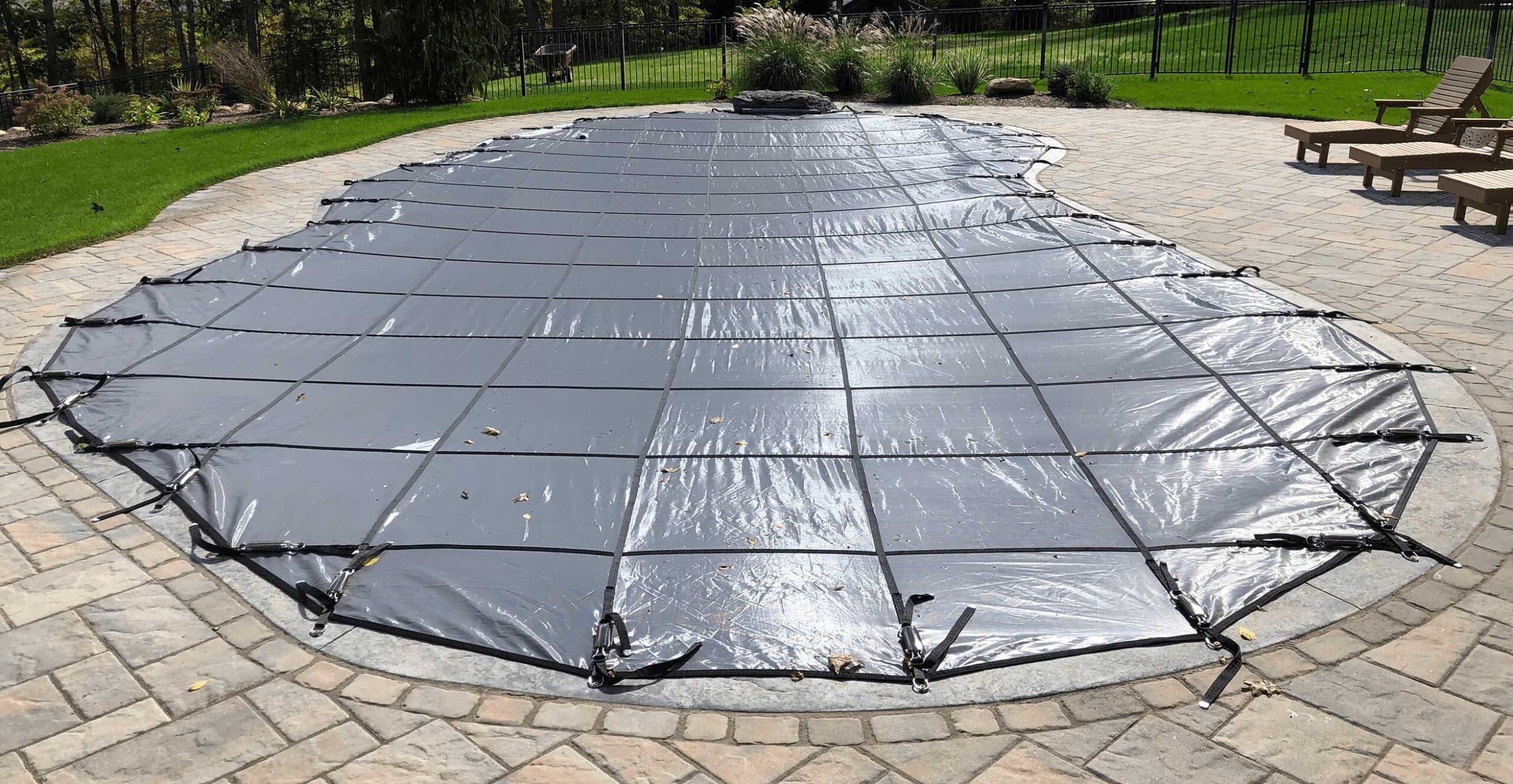
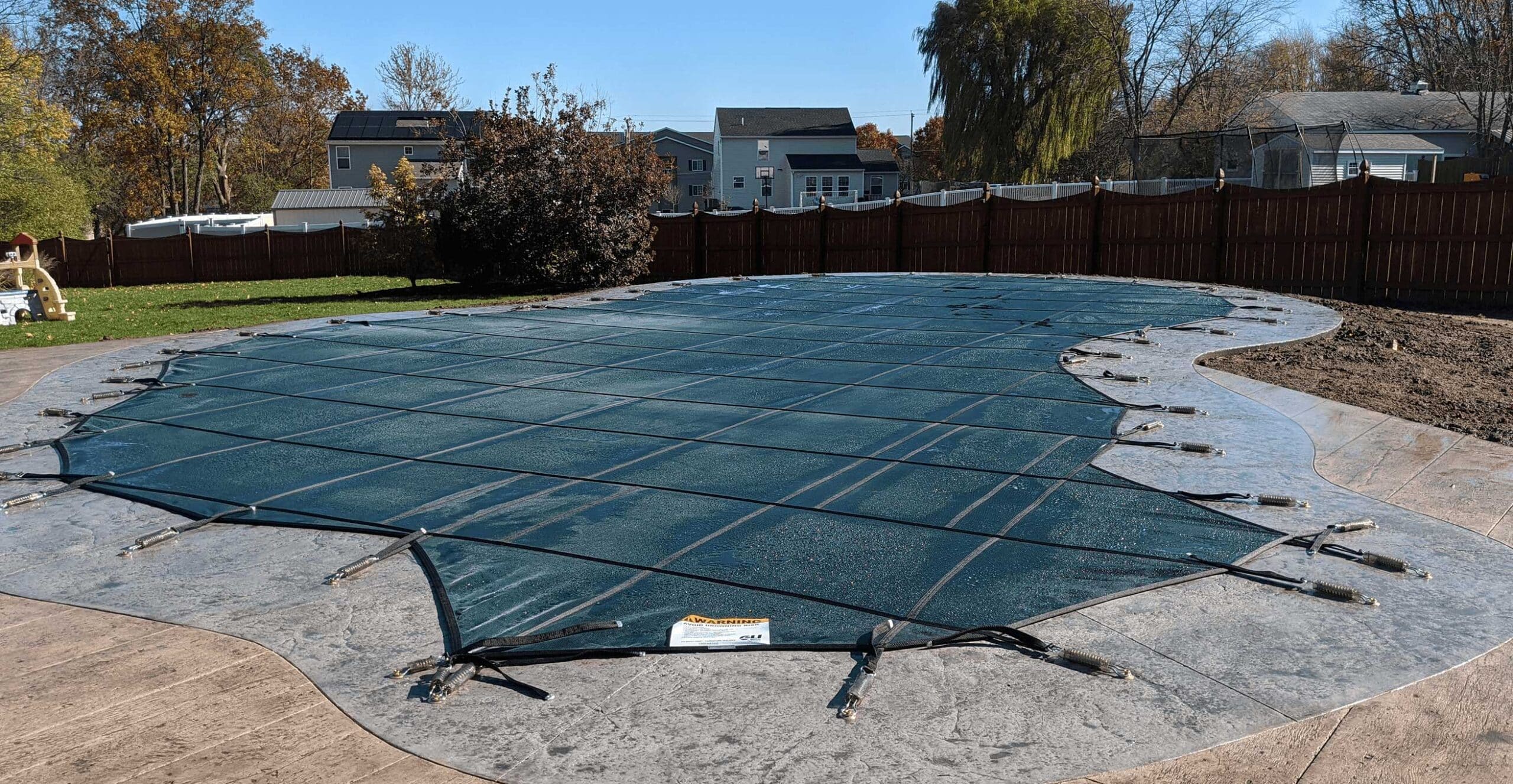
Cover the pool securely with a seasonal safety cover. Be sure that the edge of the cover is sealed so that wind does not get under it. A good pool cover resists water, weather, and pool chemicals and keeps out leaves and other debris.
“In most cases, I prefer a mesh cover for the winter because they allow water to pass through and chlorine gas to escape until the snow and ice comes to make it solid!”
How to Winterize Your Pool in Mild Climates
If you live in a mild climate, there may be periods where you use your pool very infrequently as it is not uncommon to see temperatures drop below freezing from time to time even in warmer areas.
Step One: Check Your Freeze Protection
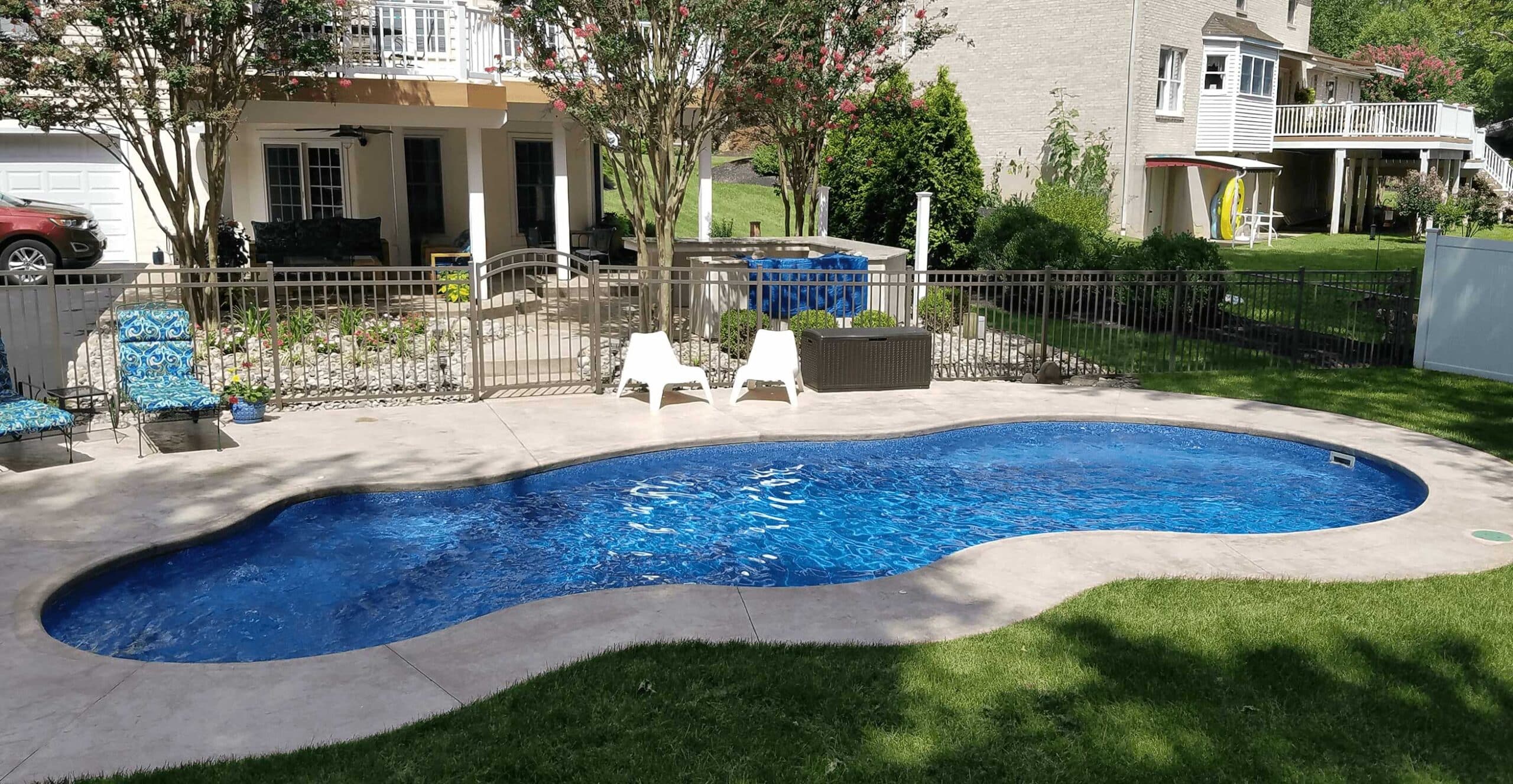
Make sure to check your freeze protection. It can often be a manual dial or built into your pool pump or pool automation. As the temperature begins to drop, ensuring your freeze protection is working will prevent any cracked or damaged equipment.
Step Two: Cut Filter Run Time
Cut your filter running time in half and reduce the amount of run time on the pump. If possible, set the run time to be during the evening when it is coldest so that when your freeze protection activates, it is also counting toward the amount of time needed to filter the pool. This results in a little cost savings that can add up if done properly.
Step Three: Balance the Water
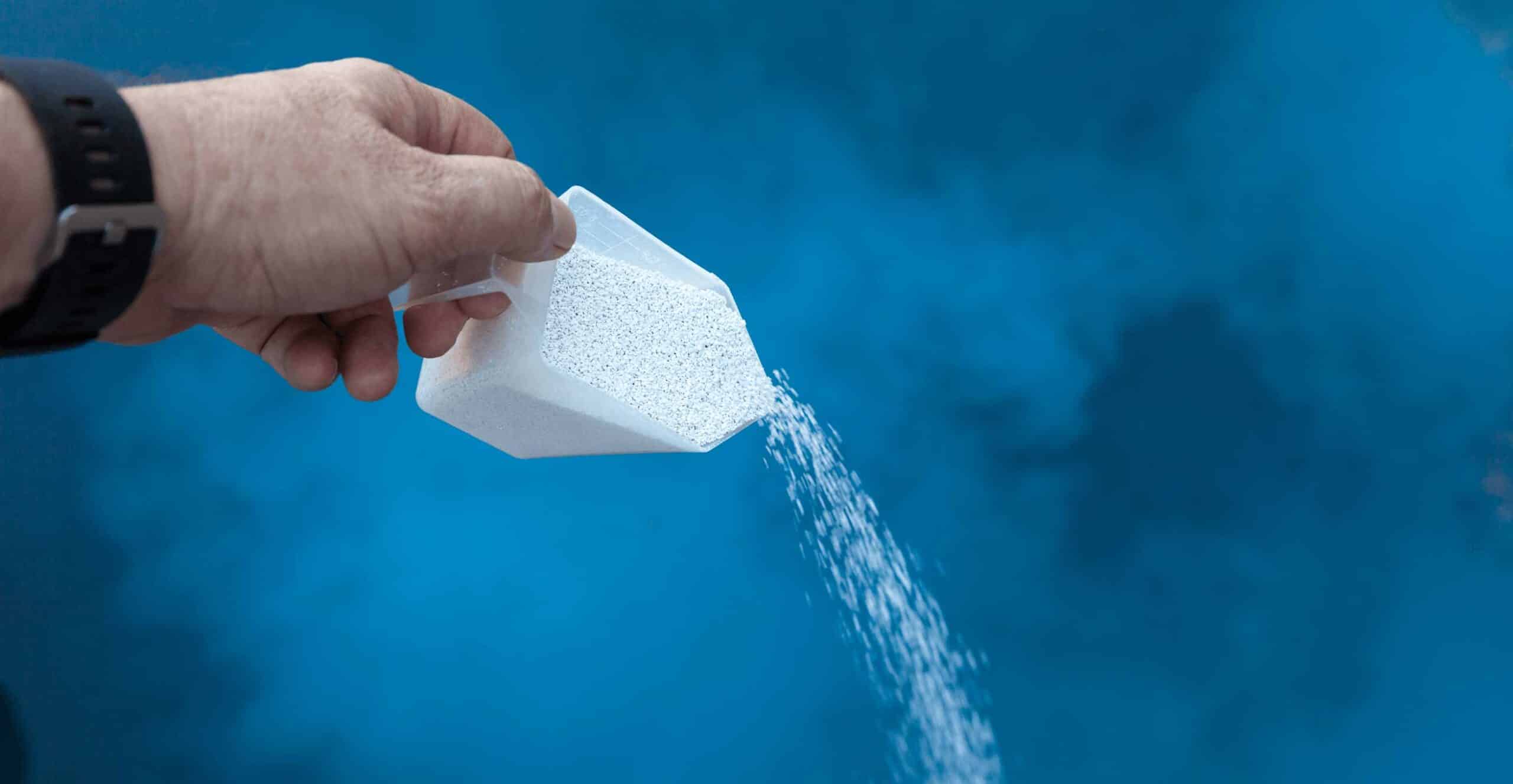
Adjust your pH and chlorine levels. Keep pool pH between 7.2-7.8 and test regularly to keep free available chlorine between 1.0 and 3.0 parts per million.
Step Four: Winterize Accessories
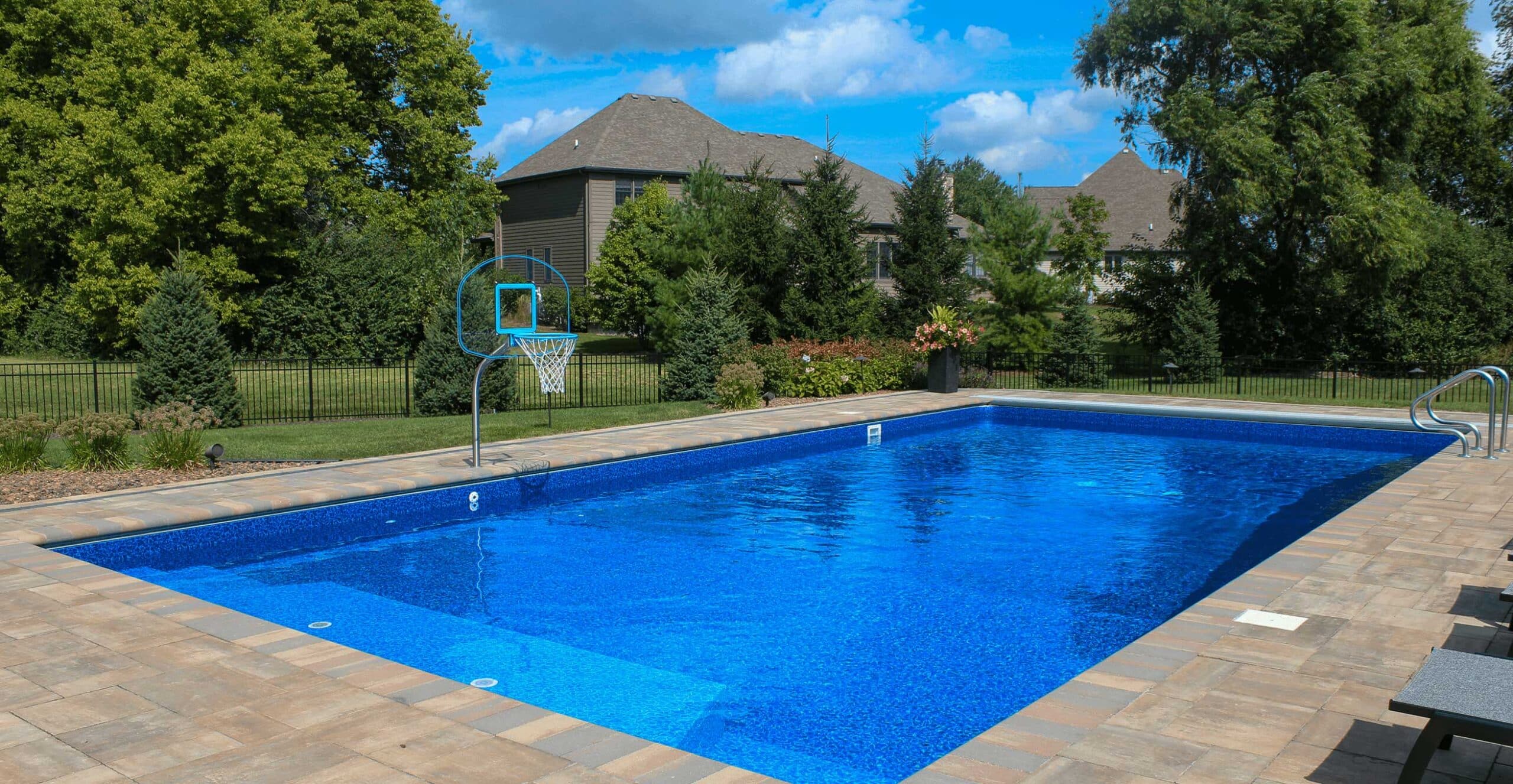
Follow the manufacturer’s instructions for proper care and maintenance of your pool equipment, even during this time of reduced use. Consider winterizing additional pool features you may have such as slides and other accessories to prevent damage.
Step Five: Clean & Cover
Unless you cover your pool, clean the skimmer weekly, maintain the filter according to the manufacturer’s instructions, and vacuum as needed.
Covering your pool will keep out debris and reduce the need for chlorine. Before covering it, shock treat the water according to the chemical manufacturer’s directions.
Winterization Checklist
Download our free maintenance resource to get step-by-step instructions for closing and winterizing your pool in cold and mild climates.
Pool Winterization FAQs
When temperatures start dropping it’s time to take action to protect your pool. Make sure you follow the correct steps to get your pool ready before you put on your seasonal safety cover and close your pool for the winter.
Give yourself enough time and start the process when your pool water starts to drop. Freezing water can expand and cause damage.
If you have any questions, call your local Latham Independent Builder for help.
As a general rule, you want to lower the water level to approximately 1” beneath the skimmer. You never want to drain your pool completely. If you feel there’s a need to drain your pool, contact a pool professional. If you’re using a seasonal pool cover, be sure to follow the manufacturer’s instructions regarding the water level. Some will recommend that after blowing out the pool pipes you plug the skimmer and raise the water level to a point that it will support the cover when it’s weighed down by snow.
If you’re unsure about draining the water or any steps of the winterizing process, contact your Latham pool dealer.
Staying on top of pool maintenance during swim season and then properly winterizing your pool when the weather starts to turn can save you a tremendous amount of time, money and frustration over the lifetime of your backyard swimming pool.
Closing and covering your pool during the off-season also means you’ll have less maintenance work to do when it’s time to re-open your pool for spring. That means you and your family will be able to enjoy your pool faster as temperatures begin to warm up.
If you’re a new pool owner and these steps may seem overwhelming, contact your local Latham Independent Builder for assistance.
We strongly advise against leaving your pool uncovered during the winter months. If your pool will not be in use for a prolonged period of time, cover it for safety reasons. This will also help to prevent algae growth, keep debris out of the pool and help maintain proper water chemistry.
Covering your pool in the winter will also save you time, as you won’t have to clean your pool while it’s not in use. It will also reduce the amount of cleaning and maintenance you will need to do when it’s time to open your pool.
Learn More About Pool Maintenance